
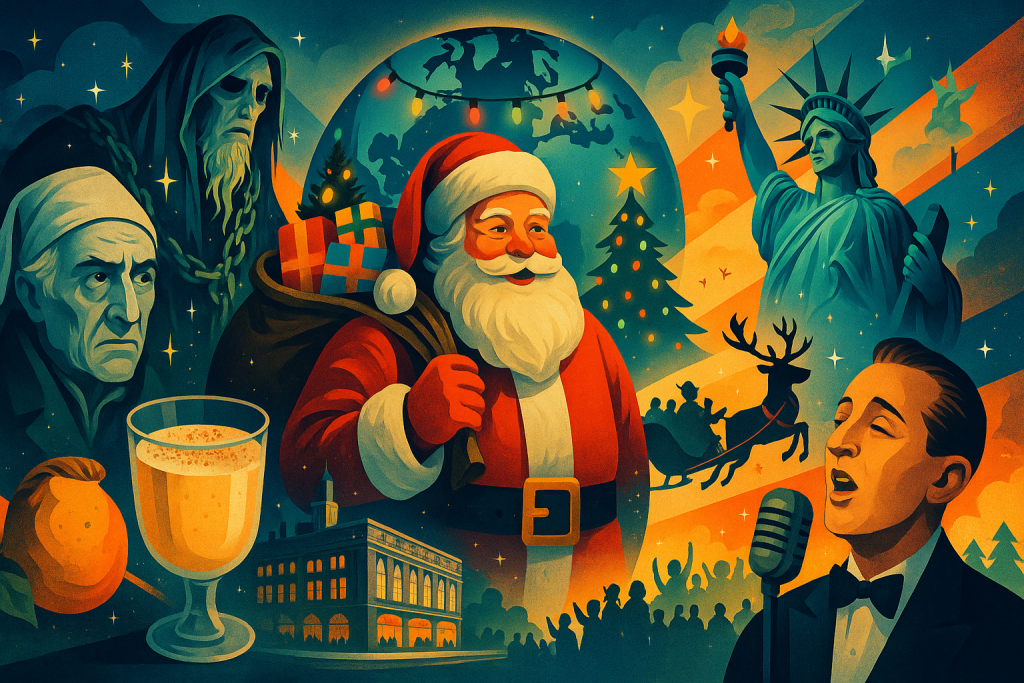
By the late 18th century, Christmas had become a patchwork of ancient European customs, Christian observances, and regional folk practices. Yet the holiday had not yet taken on the warm, sentimental, and globally recognizable form it holds today. Between the American Revolution and the mid-20th century, Christmas underwent a remarkable reinvention—driven by literature, music, entertainment, and the emerging mass culture of the industrial age.
This period marks the modern revival and eventual commercialization of Christmas, transforming it from a culturally diverse seasonal observance into a unified, worldwide phenomenon.
Great Britain: The English Christmas Revival
Charles Dickens and A Christmas Carol (1843)
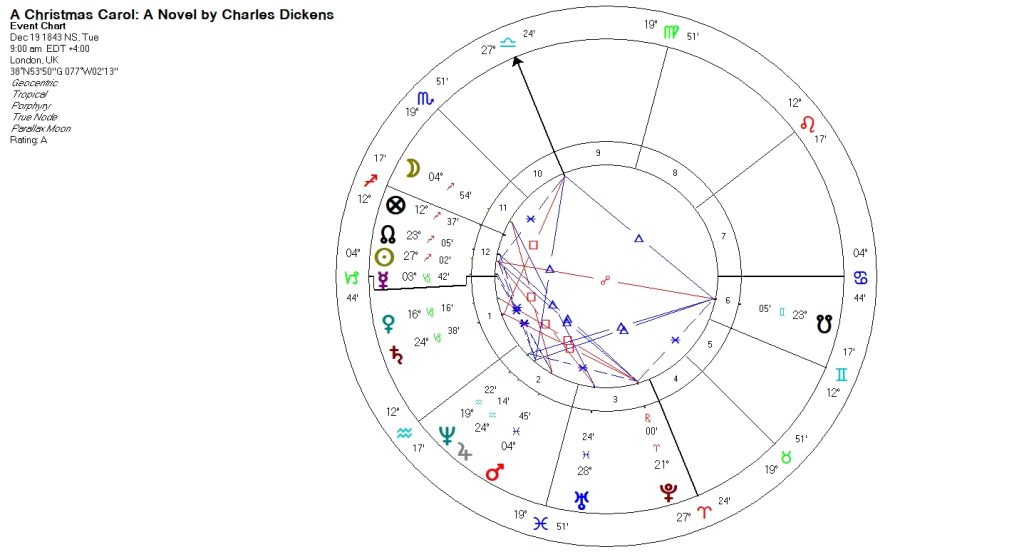
A Christmas Carol, written by Charles Dickens and first published in London on December 19, 1843, became one of the most influential works in the modern shaping of Christmas. Dickens (1815–1870), perfectly attuned to British sensibilities, published his story at the exact moment when Christmas traditions were being revived, examined, and reshaped. New customs such as Christmas cards and decorated Christmas trees were entering British homes, alongside older practices that had long been dormant.
The novella tells the story of Ebenezer Scrooge, a bitter and cold-hearted London businessman who despises Christmas for its perceived impracticality and expense. Set on a bleak Friday evening, December 22, 1843—seven years after the death of Scrooge’s business partner Jacob Marley—the tale begins with Scrooge rejecting a dinner invitation from his nephew Fred, turning away charitable solicitors seeking aid for the poor, and begrudgingly permitting his underpaid clerk Bob Cratchit a day off for Christmas.
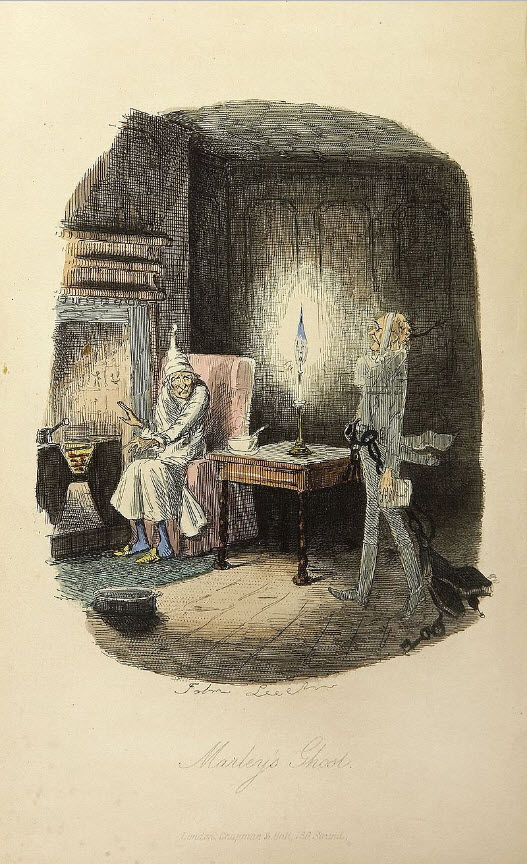
That night, Scrooge is visited by Marley’s ghost, condemned to wander the earth bound by chains forged during his lifetime of greed and neglect. Marley warns Scrooge that he has one chance to escape the same fate: he will be visited by three spirits on three successive nights.
The Spirit of Christmas Past:
The first spirit brings Scrooge back to the lonely Christmas of his childhood in 1798, spent at boarding school while other boys returned home to their families. It then shows him a tender moment with his beloved sister Fan (1803), and a joyful party hosted by his former employer Fezziwig (1804), whose generosity contrasts sharply with Scrooge’s own miserliness.
The spirit also reveals the moment in 1813 when Scrooge’s fiancée, Belle, breaks off their engagement because his love of wealth has eclipsed all else. Finally, Scrooge sees Belle as a happily married woman on Christmas Eve 1836—while he, newly partnered with Marley, was absorbed with business and showed little grief at Marley’s death.
The Spirit of Christmas Present:
Next, the Spirit of Christmas Present reveals scenes of warmth and fellowship across London: Fred’s Christmas party, full of laughter; the Cratchit family’s modest but heartfelt feast; and Tiny Tim’s frail but cheerful presence. The spirit warns that Tiny Tim will die unless the future is altered.
The spirit then introduces Scrooge to two destitute and symbolic children—Ignorance and Want—warning that neglecting them leads inevitably to societal ruin.
The Spirit of Christmas Yet to Come:
The third spirit shows Scrooge a grim future: the death of a despised man whose belongings are scavenged and sold, a poor couple relieved that this death gives them time to settle their debts, and the Cratchit family mourning the death of Tiny Tim.
Scrooge finally sees his own neglected grave. Horrified, he pleads that the future may change if he changes.
Scrooge’s Awakening:
Scrooge awakens on Christmas morning a transformed human being—emotionally rich, repentant, and eager to embrace compassion, generosity, and joy. He anonymously provides the Cratchit family with a large turkey for their meal, spends the day with Fred’s family, and the next morning gives Bob Cratchit a raise and becomes a father figure to Tiny Tim.
Since its publication, A Christmas Carol has never been out of print and has been adapted countless times for stage, film, opera, and other media. Its publication coincided with a Mars–Jupiter–Neptune conjunction on December 1, 1843—a fitting astrological signature for a cultural work that infused spiritual idealism, moral awakening, and humanitarian sentiment into modern Christmas consciousness.
Eggnog: Christmas Libation in Post-Revolutionary America
In the early years of the United States, Christmas celebrations fell out of favor due to their association with British customs following the American Revolution (1775–1783). Christmas did not become a federal holiday until 1870. Despite this, eggnog remained a consistent seasonal beverage throughout the nation.
The word “eggnog” appears in the late 1700s and may derive from “nog,” an old English term for strong beer, or “noggin,” a small wooden mug used in taverns.
In Britain, the drink was popular among the aristocracy, made by mixing milk and eggs with brandy, Madeira, or sherry. It crossed the Atlantic to the American colonies in the early 18th century, where it evolved into a holiday tradition.

George Washington’s Eggnog
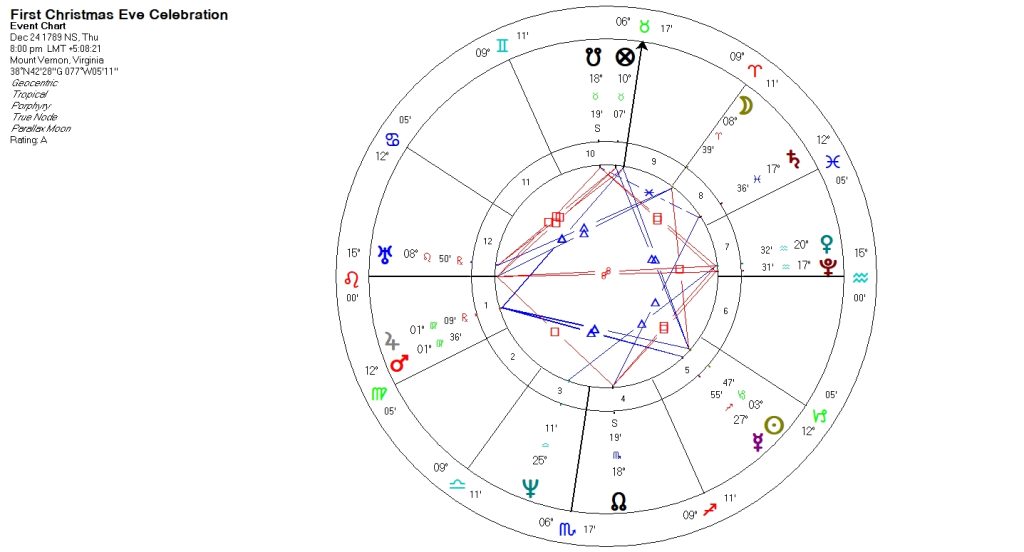
George Washington—Revolutionary War general, Founding Father, and first President of the United States—was famous for serving his own potent eggnog recipe at Christmas gatherings at Mount Vernon and during his presidency (1789–1797). His holiday social schedule included:
8:00 pm – Guest arrival with eggnog and dancing
10:00 pm – Seated supper
Midnight – Dancing resumes
5:00 am – Last guests depart
Washington’s recipe was not for the fainthearted:
- 1 quart heavy cream
- 1 quart milk
- 1 dozen tablespoons sugar
- 1 pint brandy
- 1 dozen eggs
- ½ pint rye whiskey
- ½ pint Jamaican rum
- ¼ pint sherry
His instructions ended with: “Taste frequently.” After a few cups, as Washington joked elsewhere, “Nobody could tell a lie.”
The United States: The Globalization of Christmas
Christmas Becomes a Federal Holiday
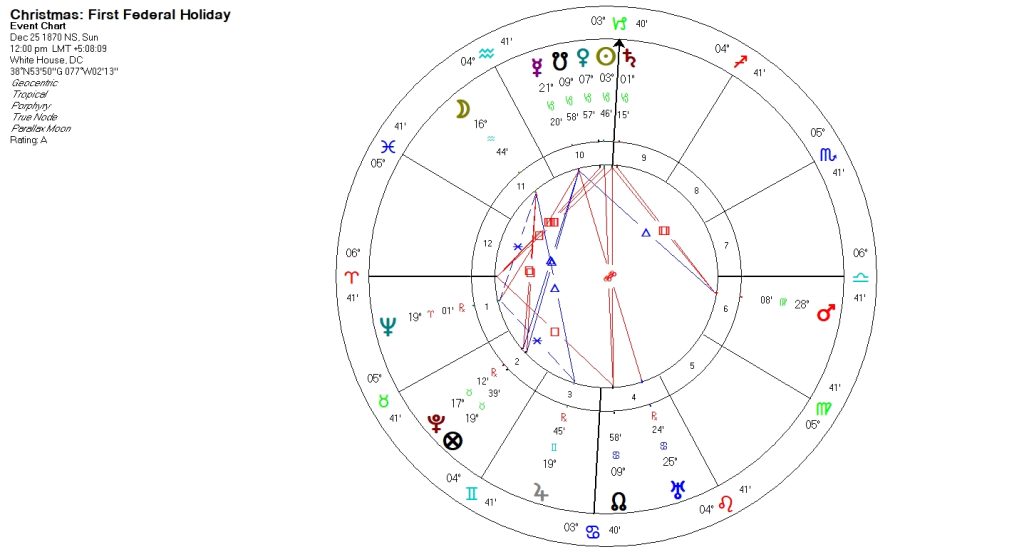
On June 26, 1870, Christmas was officially declared a United States federal holiday. By this time, the holiday had become widely celebrated by both Christians and non-Christians, integrating regional customs from across Europe and America.
The First Electric Christmas Tree at the White House
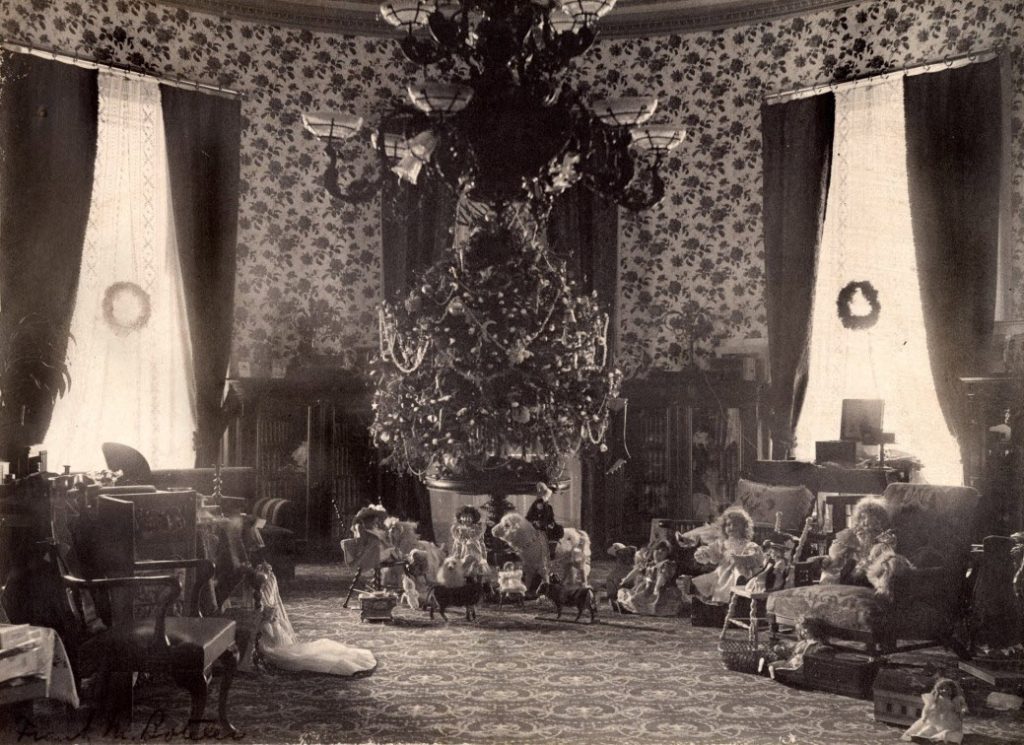
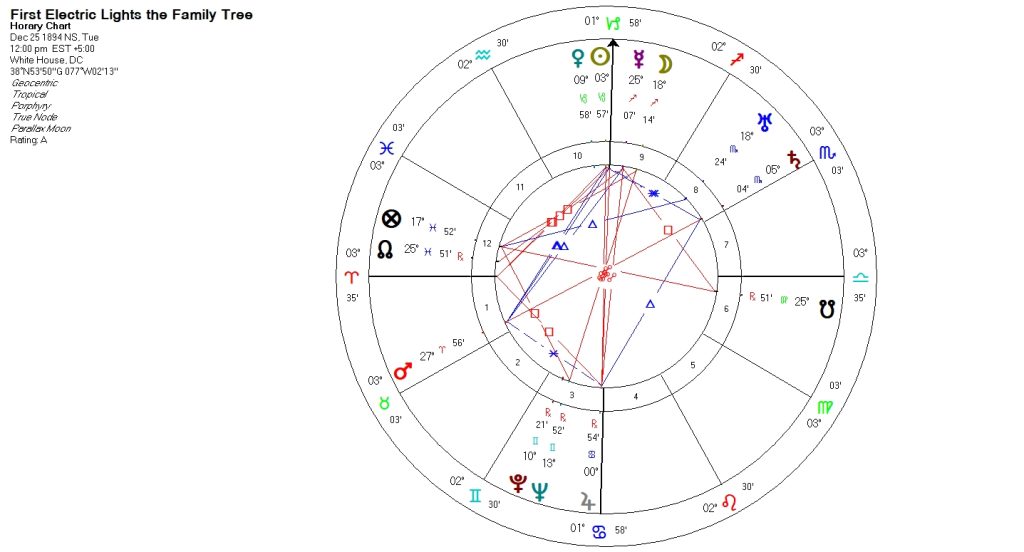
In 1894, during the presidency of Grover Cleveland, the first electric lights were used on a family Christmas tree. The tree, placed in the second-floor Oval Room of the White House, was decorated with red, white, and blue bulbs to delight the president’s young daughters.
Industrialization and the Rise of Christmas Commerce
During the early 20th century—especially around 1900, during the Uranus–Pluto opposition—the Industrial Revolution transformed Christmas into a major commercial season. The holiday became the peak selling period for American retailers, a trend that soon spread internationally.
Macy’s Thanksgiving Day Parade
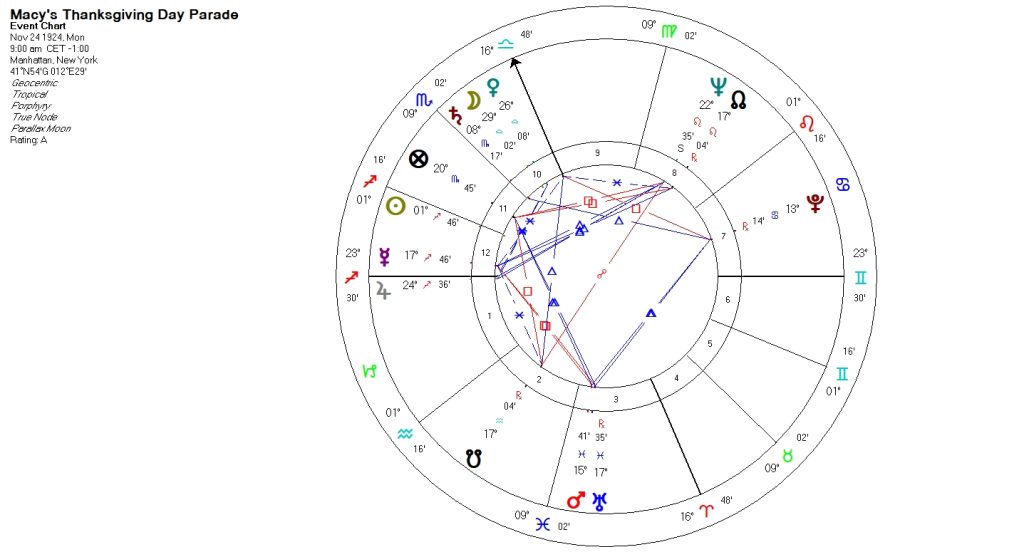
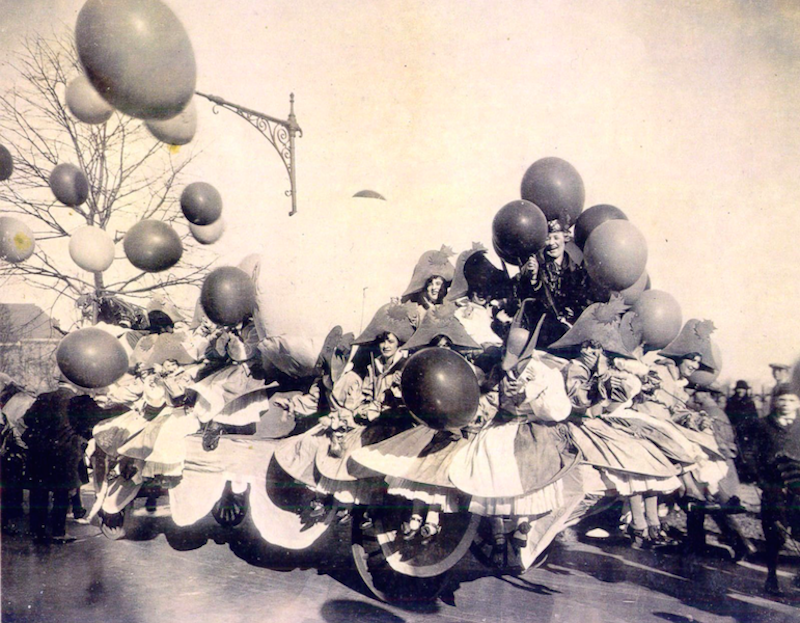
The modern American Christmas season begins with the arrival of Santa Claus at the end of the Macy’s Thanksgiving Day Parade. The first parade took place on November 27, 1924, beginning at 9:00 AM.
Many Macy’s employees at the time were first-generation European immigrants eager to celebrate the American holiday season with traditions reminiscent of their parents’ homelands. The parade was an immediate success, drawing more than 250,000 spectators, and became an annual institution.
Astrologically, Jupiter was rising in Sagittarius during that first parade—an appropriate signature for an expansive, culturally unifying public spectacle.
Christmas Music
Bing Crosby and the Sound of the American Christmas
Bing Crosby helped define the emotional sound of Christmas in the 20th century. His Merry Christmas album became one of the most beloved holiday recordings of all time.
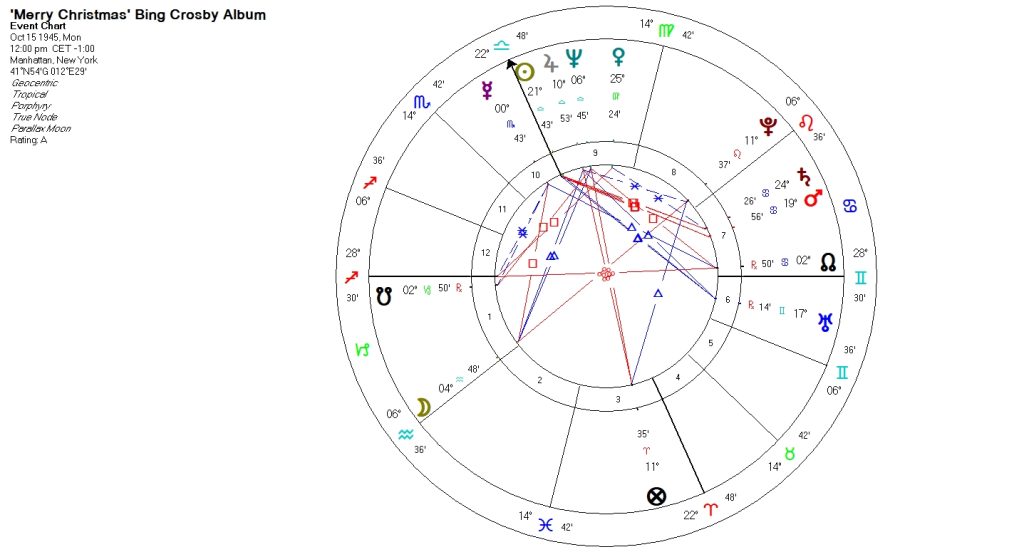
The original 1945 release topped the Billboard pop album charts for weeks. In 1947, Decca Records issued a second edition, and in 1955, a third and final edition appeared, adding four additional tracks and giving the album its now-iconic shape. This edition featured the Andrews Sisters on several songs, adding lively harmonies and nostalgic charm.
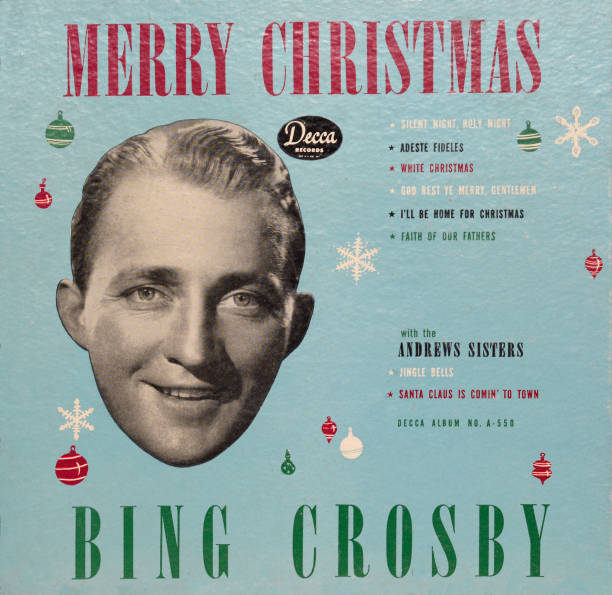
Notable tracks include:
- “Jingle Bells” (with the Andrews Sisters)
- “Mele Kalikimaka”
- “Santa Claus Is Coming to Town”
Other highlights from Crosby’s solo performances include:
- “Silver Bells”
- “I’ll Be Home for Christmas”
- “Christmas in Killarney”
- “Faith of Our Fathers”
Crosby’s warm baritone and sentimental phrasing created the emotional template for the American Christmas. Merry Christmas has sold over 15 million copies, second only to Elvis Presley’s Christmas album.
Hollywood: Miracle on 34th Street
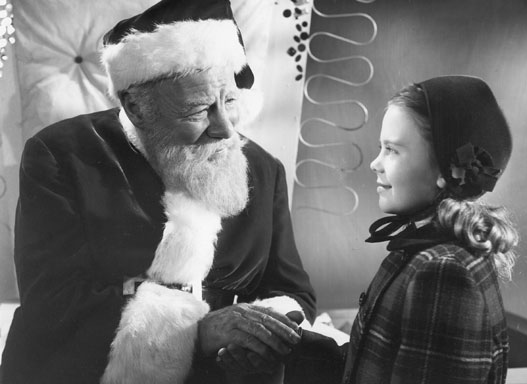
Shortly after World War II, Hollywood began producing high-budget Christmas films that combined drama, sentimentality, and mythic charm. One of the earliest and most enduring examples is Miracle on 34th Street (1947), written and directed by George Seaton. The film premiered on June 4, 1947, at the Roxy Theatre in Manhattan.
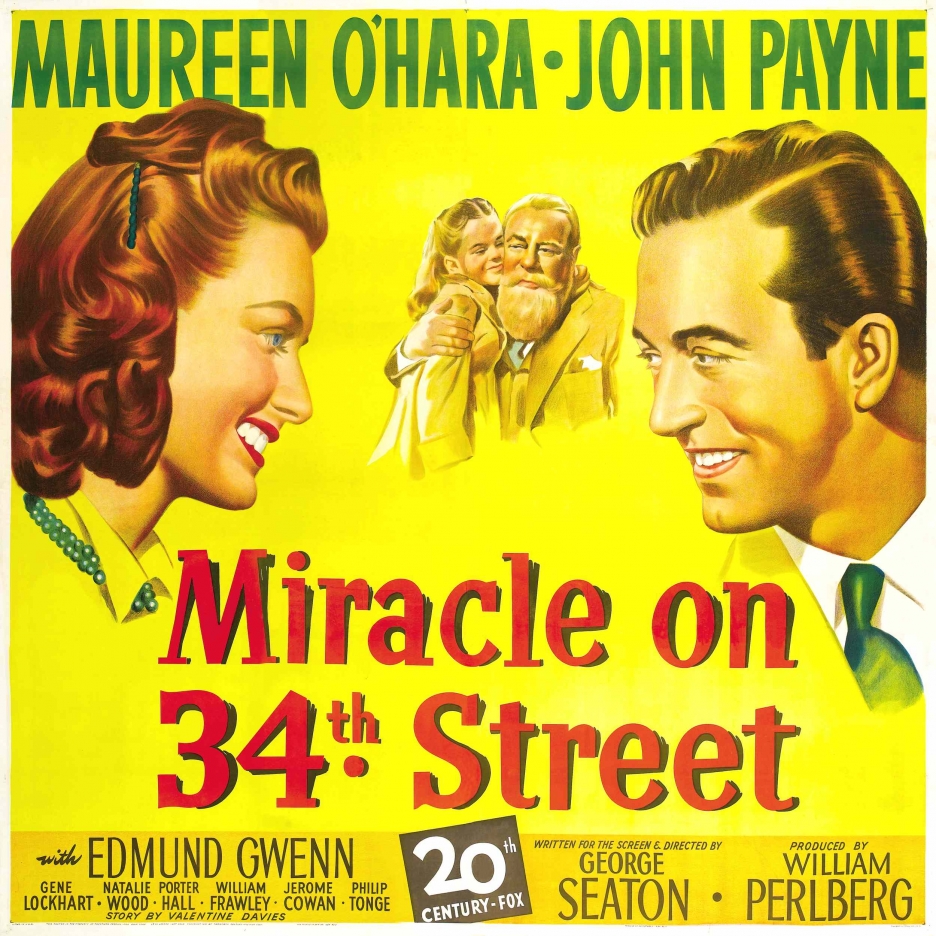
The story follows Kris Kringle, an elderly, kindhearted man hired to play Santa Claus at Macy’s Department Store, who insists that he is the real Santa. His presence challenges the skepticism of Doris Walker, a pragmatic Macy’s executive, and her young daughter Susan, who has been raised to dismiss fantasy and believe only in what can be proven.
Throughout the film, Kris’s sincerity and gentle sense of wonder alter the lives of those around him. His authenticity and kindness gradually awaken belief, joy, and imagination in a post-war society hungry for hope.
Edmund Gwenn’s Oscar-Winning Santa
Seventy-two-year-old Edmund Gwenn delivered a definitive portrayal of Santa Claus, earning the Academy Award for Best Supporting Actor. The film also won Oscars for: Best Writing, Original Story and Best Writing, Screenplay.
In 2005, Miracle on 34th Street was selected for preservation in the U.S. National Film Registry for being “culturally, historically, or aesthetically significant.”
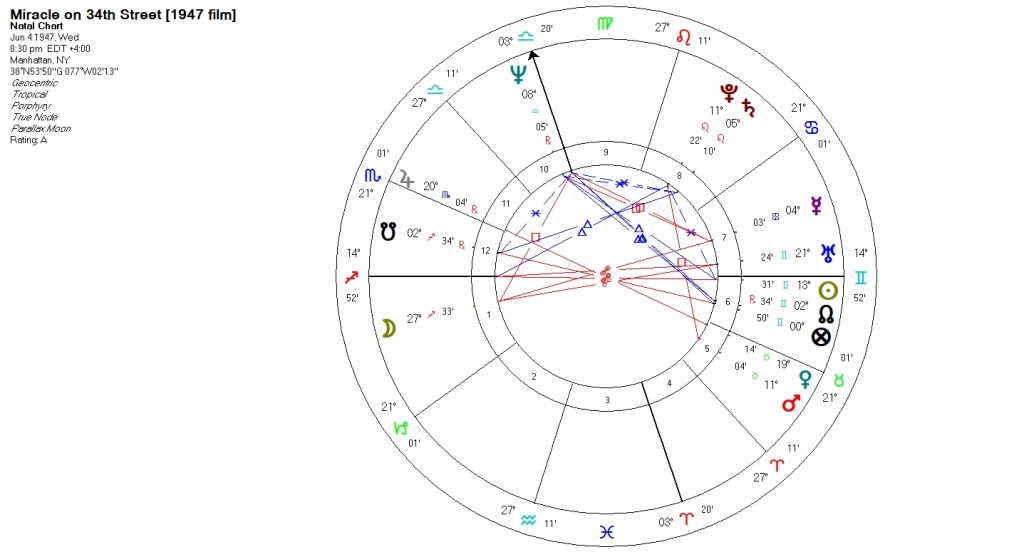
The Horoscope of the Premiere
The world premiere horoscope for Miracle on 34th Street contains signatures fitting its magical, heartfelt themes:
- Sagittarius rising with the Moon rising, symbolizing joy, warmth, and belief
- Sun–Uranus conjunction in Gemini, highlighting originality and surprise
- Neptune near the Midheaven, emphasizing magic, mystery, and imagination
These astrological portents help explain why the film continues to enchant audiences decades later.
The Film’s Enduring Message
The film offers some of the most memorable Christmas lines ever written:
Susan Walker: “I believe, I believe, I believe.”
Fred Gailey: “Faith is believing in things when common sense tells you not to.”
Kris Kringle: “Oh, Christmas isn’t just a day. It’s a frame of mind.”
The magic of the film lies in its ability to make even the most skeptical viewer a believer—at least for a moment—while capturing the humanitarian values of sincerity, faith, and compassion.
The Holiday We Recognize Today
By the mid-20th century, Christmas had undergone a complete transformation. From Dickens’s moral and spiritual revival in A Christmas Carol, to George Washington’s festive eggnog traditions, to the commercialization enabled by industrialization and retail culture, and finally to the sentimental magic of Hollywood, Christmas emerged as a global cultural event.
The holiday’s modern form reflects centuries of myth, music, storytelling, and spiritual symbolism—woven together into the familiar and beloved celebration that continues to enchant millions around the world.
It is a holiday shaped not only by history and culture, but also by the enduring human desire for hope, generosity, and imagination, especially in the darkest time of the year.
For nearly four decades, William Stickevers has empowered business leaders, independent thinkers, and visionaries to navigate global shifts and critical turning points with clarity and confidence. His unique blend of astrological techniques, macroeconomic insights, and strategic forecasting equips clients to stay ahead of the curve and thrive in uncertain times. Discover how William’s in-depth forecasts, programs, and astrological consultations can help you make more confident, well-timed decisions, and recognize opportunities others overlook. Visit williamstickevers.com for your strategic advantage in business, finances, and life.
A trends forecaster, William’s annual global forecasts are backed by a deep study of economies, geopolitics, archetypal cosmology, and modern astrological forecasting techniques. William’s predictions for the outcome of the U.S. Midterm and Presidential Elections are well documented on his blog.
William Stickevers is a strategic astrological advisor, advising clients from 28 countries for nearly four decades with strategy and cosmic insight and foresight to gain an asymmetrical advantage in their investing, business planning and decisions, and to live a more fulfilled life according to their soul’s code and calling.
William has been a regular guest on Coast to Coast AM with George Noory and The Jerry Wills Show, and featured on The Unexplained with Howard Hughes, Beyond Reality Radio with Jason Hawes and JV Johnson, We Don’t Die Radio with Sandra Champlain, Supernatural Girlz, Paranormal Podcast, and Alan Steinfeld’s New Realities. An international speaker, William has lectured at the New York Open Center, Edgar Cayce’s Association for Research and Enlightenment (A.R.E.), two Funai Media events in Tokyo, Japan, the United Astrology Conference (2018), for the National Council for Geocosmic Research (NYC, Long Island, New Jersey, San Francisco chapters), American Federation of Astrologers (Los Angeles), the Astrological Society of Connecticut, the San Francisco Astrological Society, and in Europe (Munich and Bucharest) and Japan (Tokyo, Osaka, Yokohama).
More information on Programs, Consultations and Forecast Webinars are at his website www.williamstickevers.com.


