
This Saturday, October 31, 2026, is the 100th anniversary of Harry Houdini’s death. The man who spent his last years exposing fraudulent mediums died on Halloween and left his wife a coded message to prove he had survived death. Two years later, a medium delivered it. A century on, no one has settled whether Houdini got through.
The centennial arrives under a fitting sky. Mercury, the planet of messages, turned retrograde on October 24 in Scorpio, the sign of death, and will move backward through it for all of Allhallowtide. Venus is retrograde alongside it. Both turn direct on the same day, November 13.
The question Houdini posed now has a commercial answer. Companies sell AI simulations of the dead, built from their texts, voices, and photographs. One is called Séance AI; another generates phone calls from deceased loved ones. (HealthDay; Hospice News)
The dead reaching the living through a code, a telephone line, or a machine is the oldest idea Halloween carries. To see why this night carries it, go back twelve centuries, to the bishops who moved a feast of the saints onto the Celtic festival of the dead.
From All Martyrs to All Souls
Halloween is the eve of a Christian feast laid over a Celtic one. The Christian layer took about four centuries to build.
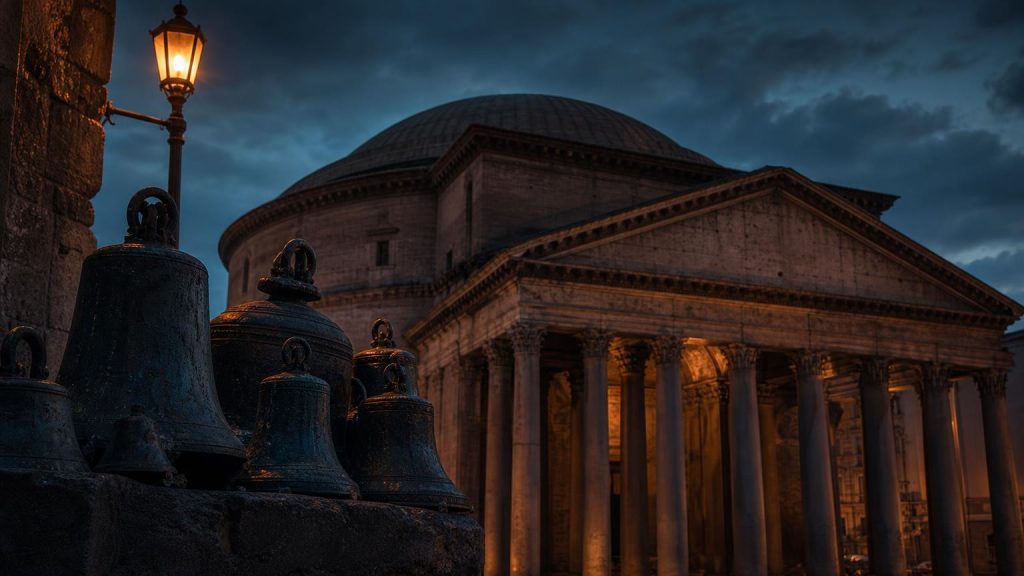
On May 13, traditionally dated to 609 A.D., Pope Boniface IV dedicated the Pantheon in Rome to the Virgin Mary and all the martyrs. That act established the feast of All Martyrs in the Western church, observed on May 13.
In the next century, Pope Gregory III (731–741) dedicated a chapel in St. Peter’s Basilica to all the saints, martyred or not. Church tradition ties that dedication to November 1, and Rome came to keep the feast on that date.
In 835, at the urging of Pope Gregory IV, Emperor Louis the Pious decreed that All Saints be celebrated on November 1 throughout Gaul and Germany. That decree carried the date across the Frankish realm and, from there, across Western Christendom. (Britannica; Roger Pearse on the 835 edict)
November 1 was no empty date. It was already Samhain, the most important festival in the Celtic calendar. Placing a Christian feast on it gave Northern European bishops a way to absorb and repurpose the older observance rather than fight it.
The third day came later. Around 998, Abbot Odilo of Cluny, in Burgundy, ordered the monasteries of the Cluniac order to keep November 2 as the Commemoration of the Faithful Departed: All Souls’ Day. The practice spread to the rest of Latin Christendom. Its placement was deliberate: set beside All Saints, it expressed the belief that the saints could intercede for the ordinary dead.
Praying for the dead, and remembering them with food, set the precedents for everything ghostly that Halloween still carries. Together the three days became Allhallowtide, a triduum running October 31 to November 2: All Hallows’ Eve, All Hallows’ Day, and All Souls’ Day. From the 9th century onward, Samhain and the two Christian feasts coexisted in Irish literature and custom well into modern times.
By the High Middle Ages, Allhallowtide was a fixed point in the European year. Church bells were rung through the night for the souls in purgatory, and criers dressed in black walked the streets ringing mournful bells, calling on Christians to remember the poor souls.
Purgatory
The engine of medieval Allhallowtide was the doctrine of Purgatory, taught across Latin Christendom until the Reformation. Purgatory was understood as a real place where souls waited between death and the Last Judgment.
It was a place of darkness where sins were purged, and souls were burnished before passage to Heaven. The punishment was proportional to the sins a person carried. Because the living could shorten that sentence through prayer, the dead had a claim on the living, and Allhallowtide was the season to honor it.
Souling and Soul Cakes
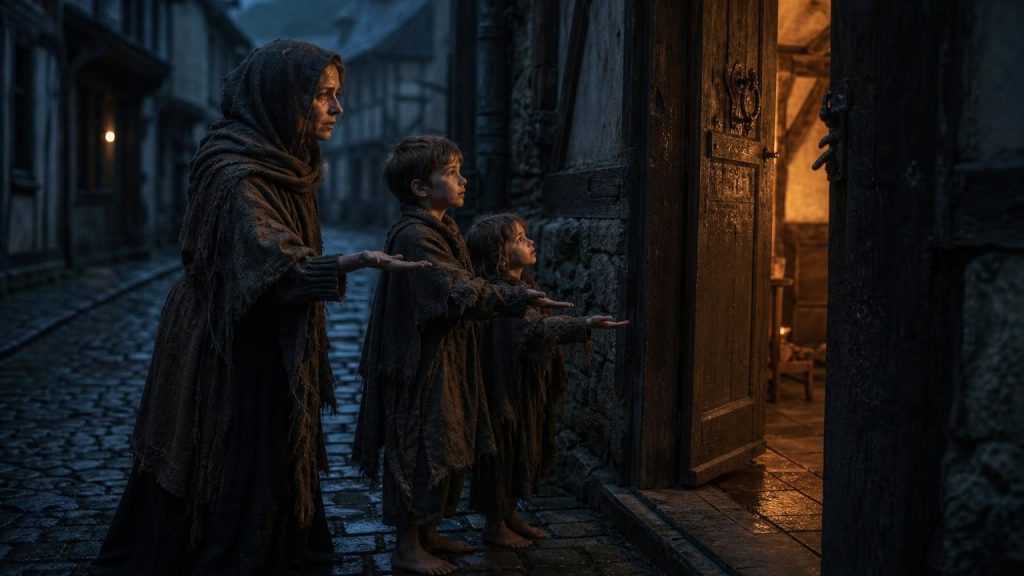
Souling was the Christian practice that most directly became trick-or-treating. It dates to at least the 15th century and was found in parts of England, Flanders, Germany, and Austria.
On All Hallows’ Eve, the poor and their children went door to door at prosperous houses asking for spiced soul cakes. Each cake stood for a soul in Purgatory. In exchange, the souler promised to pray for the household’s dead. The trade was exact: bread for the living, prayer for the departed.
Below is a traditional soul cake recipe in the style of prosperous High Medieval households (1250–1500).
Traditional Soul Cakes
Ingredients
Adapted from RecipeWise. Makes about 24 cakes, 3½ inches across.
- 2½ cups (340 g) all-purpose flour, sifted
- ¾ cup (170 g) granulated sugar
- ¾ cup (170 g) butter, diced
- ½ tsp ground cinnamon
- ½ tsp ground nutmeg
- ¼ tsp allspice
- ¼ tsp salt
- 1 egg, beaten
- 2 tsp apple cider vinegar
- Raisins, for topping (optional)
Method
- Preheat the oven to 400°F. Line two baking sheets with parchment paper.
- Whisk the flour, sugar, spices, and salt together in a large mixing bowl.
- Rub in the diced butter until the mixture resembles fine breadcrumbs.
- Add the beaten egg and the vinegar. Mix with a wooden spoon until the dough comes together; it will be firm. Press it into a ball by hand if needed.
- Cover the bowl and chill for 20 minutes.
- On a lightly floured surface, roll the dough to ¼-inch thickness and cut into large rounds.
- Press a cross into each cake with the handle of a wooden spoon, and press raisins into the tops if desired. Re-roll the scraps until all the dough is used.
- Bake one sheet at a time for 12–15 minutes, until the tops are lightly golden.
Serve warm or at room temperature. Soul cakes keep about a week in an airtight container.
Food processor method: pulse the dry ingredients, add the butter, and pulse until it resembles cornmeal. With the motor running, pour in the egg and vinegar and pulse until combined. Turn out, press into a ball, chill, and continue from step 6.
Masks, Mummers, and Shakespeare
The Halloween costume descends from two medieval habits: the mummers’ disguise and the fear of being recognized by the dead.
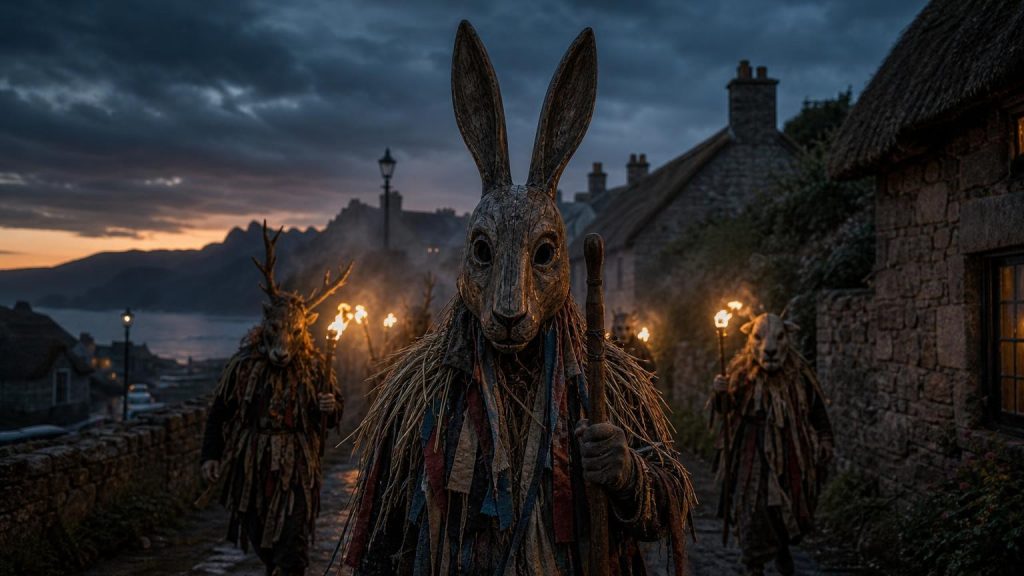
Mummers were revelers who wore costumes for parades and merrymaking on holidays, Allhallowtide among them, in medieval Britain. By Shakespeare’s day souling was common enough to serve as a punchline. In The Two Gentlemen of Verona (early 1590s), Speed mocks the lovesick Valentine for whining “like a beggar at Hallowmas.”
The mask carried a darker logic as well. The Christian minister Prince Sorie Conteh explains the old belief this way: the souls of the departed were thought to roam the earth until All Saints’ Day, and All Hallows’ Eve was their last chance to take revenge on enemies before passing on. People wore masks and costumes so that no vengeful soul could recognize them.
The souling tradition survived into the folk revival. In 1963, Peter, Paul and Mary recorded “A’ Soalin’,” built on the old soul-cake begging song. It strings together the souler’s plea for a cake, a blessing on the master and mistress of the house and everything within their gates, and the old beggar’s rhyme about a penny, a ha’penny, or a blessing in place of either. The recording is the best way to hear it; it is widely available on streaming services.
Samhain
Allhallowtide’s oldest root is Samhain (pronounced SOW-in), the Gaelic festival that opened the dark half of the year. It was the first and most important of the four quarter days in the medieval Gaelic calendar, celebrated October 31 to November 1 in Ireland, Scotland, and the Isle of Man. It marked the end of the harvest and the start of winter.
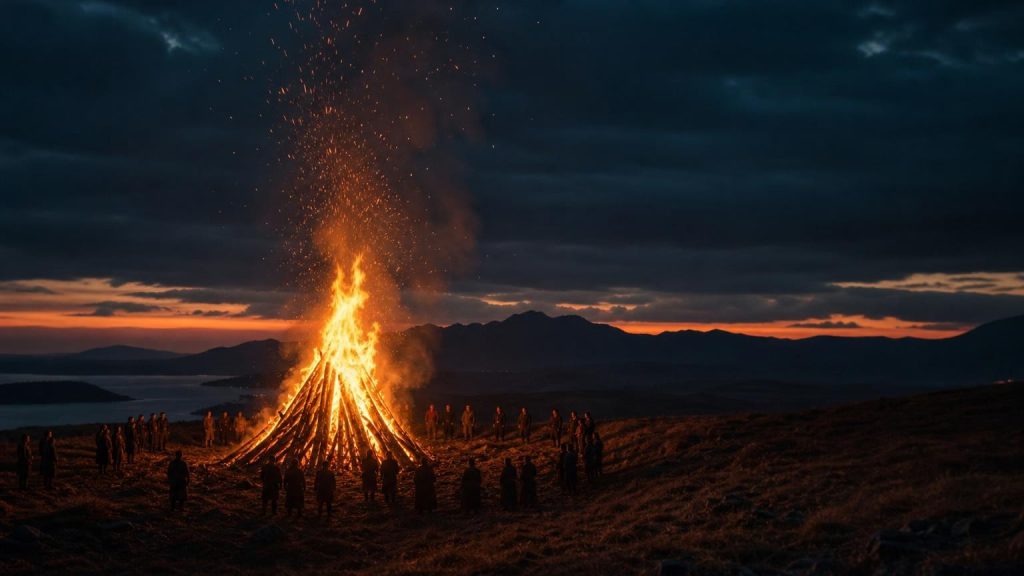
Samhain was also a festival of the dead. Like Beltane, it was a liminal time, when the boundary between this world and the Otherworld thinned. Spirits and fairies crossed more easily and were especially active. They had to be propitiated so that people and livestock would survive the winter, so offerings of food, drink, and portions of the crops were left outside.
The dead themselves were said to come home seeking hospitality. Places were set for them at the table and by the fire. In 19th-century Ireland, households lit candles and said formal prayers for the souls of the dead before the eating, drinking, and games began.
Those games were divinations, aimed above all at marriage and death. Apples and nuts were the usual instruments: apple bobbing, nut roasting, scrying or mirror-gazing, pouring molten lead or egg whites into water, and reading dreams.
Fire mattered most. Special bonfires were lit, and their flames, smoke, and ashes were held to protect, cleanse, and reveal. In some places torches lit from the bonfire were carried sunwise around homes and fields to guard them. The fires were a form of sympathetic magic: they imitated the Sun, strengthening the powers of growth against the decay and darkness of winter.
The practices were strong enough to alarm the church. In Scotland, some parish elders banned the bonfires and divination games outright. In Wales, the fires were lit to keep the souls of the dead from falling to earth, and later to keep the devil away.
Two Samhain Night Practices
Samhain was held to be the night when the veil between worlds is thinnest and the air richest with magick, which makes it the ideal time to contact a departed loved one or to look ahead into the coming year.
Mirror Rite: Speaking With Ancestors and Departed Loved Ones
You will need
- A large wall-mounted mirror
- A sprig of dried rosemary and a dried bay leaf
- Dried patchouli herb and patchouli oil
- A photo or memento of the person you want to contact
- Mugwort tea
- Three black candles (or more)
The rite
- Tie the rosemary and bay leaf to the top of the mirror with string so they hang in front and show in the reflection.
- Dab patchouli oil on your thumb and draw a large circle on the glass. Sprinkle a line of dried patchouli on the floor or table in front of the mirror.
- Set out comfortable seating and a small table with pictures or mementos of the departed and of the ancestors you wish to reach.
- Prepare a cup of mugwort tea to relax you and open your latent psychic abilities.
- Light the black candles behind you, turn off all other lights, and work by candlelight only.
- Sit before the mirror, behind the line of patchouli. Breathe deeply until you are fully relaxed, and take a few sips of the tea.
- Hold the photo or memento so it is reflected clearly in the mirror. Focus on the person, and send out the intention to reach them across the veil.
- Let your mind drift, keeping your gaze on the circle you drew. The message will not appear as a literal image on the glass. It arrives as an image in your own mind, and it may be symbolic or abstract at first.
Pendulum Divination for the Year Ahead
You will need: a pendulum and a small heap of dried mugwort.
- Rest your elbow on a flat, solid surface and let the pendulum hang still over the mugwort.
- Calibrate it. Ask questions you already know the answers to, and note which motion means “yes,” which means “no,” and which means “I don’t know.” Motions may run toward and away from you, side to side, or in a clockwise or counterclockwise circle.
- Once the responses are consistent, turn your attention to the coming year. Ask your yes-or-no questions aloud or silently, and watch the swing.
The pendulum can also work like a Ouija board: lay the alphabet out in a circle with room for the pendulum to swing between the letters.
The Gilded Age Halloween
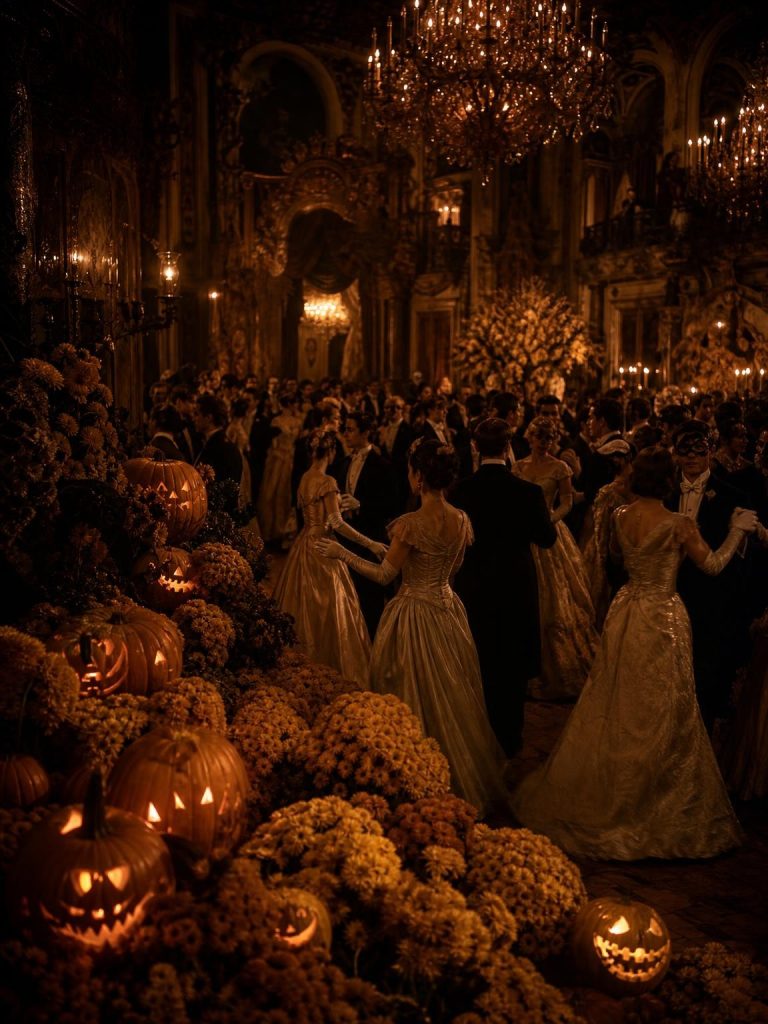
Halloween reached America with the mass Irish and Scottish immigration of the 19th century, and it climbed the social ladder fast. By the early decades of the 20th century it had become a society occasion.
The Vanderbilts and Rockefellers closed their summer houses in mid-October and returned to the city, and Halloween parties became signal events of the winter season. Debutantes waltzed at Halloween balls in hotels such as New York’s Plaza, against backdrops of jack-o’-lanterns and yellow chrysanthemums. The beggar’s festival of soul cakes had become a ballroom festival of the rich.
Houdini at 100: The Séance, the Dispute, and the Case
Harry Houdini died in Detroit on October 31, 1926, of peritonitis from a ruptured appendix. He was 52. This Halloween is the centennial of his death, and it is being marked from his birthplace to the Hudson: Budapest’s Houdini House is running a “Houdini 100” program culminating on October 30–31, and the Peabody Essex Museum in Salem is staging a Houdini magic show and curator talk on October 31. (Hungary Today; PEM)

Houdini was the greatest escape artist of the 20th century and, in his last years, the most aggressive debunker of fraudulent mediums in America. Yet on his deathbed he told his doctor that, although he did not believe in spirit communication, he would still try to send a prearranged message.
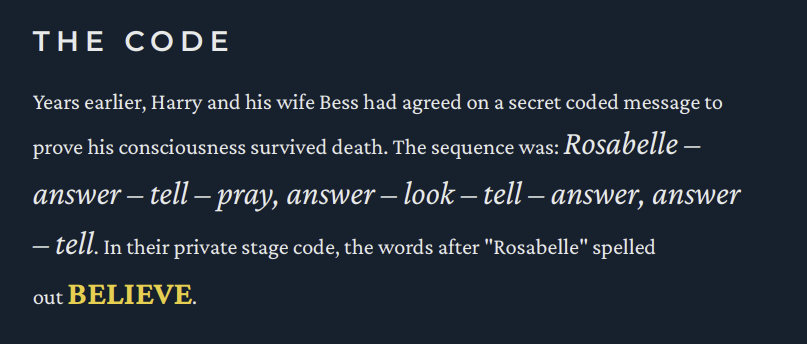
“Rosabelle” was Harry’s most private name for Bess, taken from the song she sang when they met. The full lyric was engraved inside her wedding band.
The séance
On January 8, 1929, about 26 months after Houdini’s death, the medium Arthur Ford held a séance with Bess at her home in New York. Speaking through his spirit guide, Fletcher, Ford delivered the full coded sequence. Decoded, it read: Rosabelle, believe.
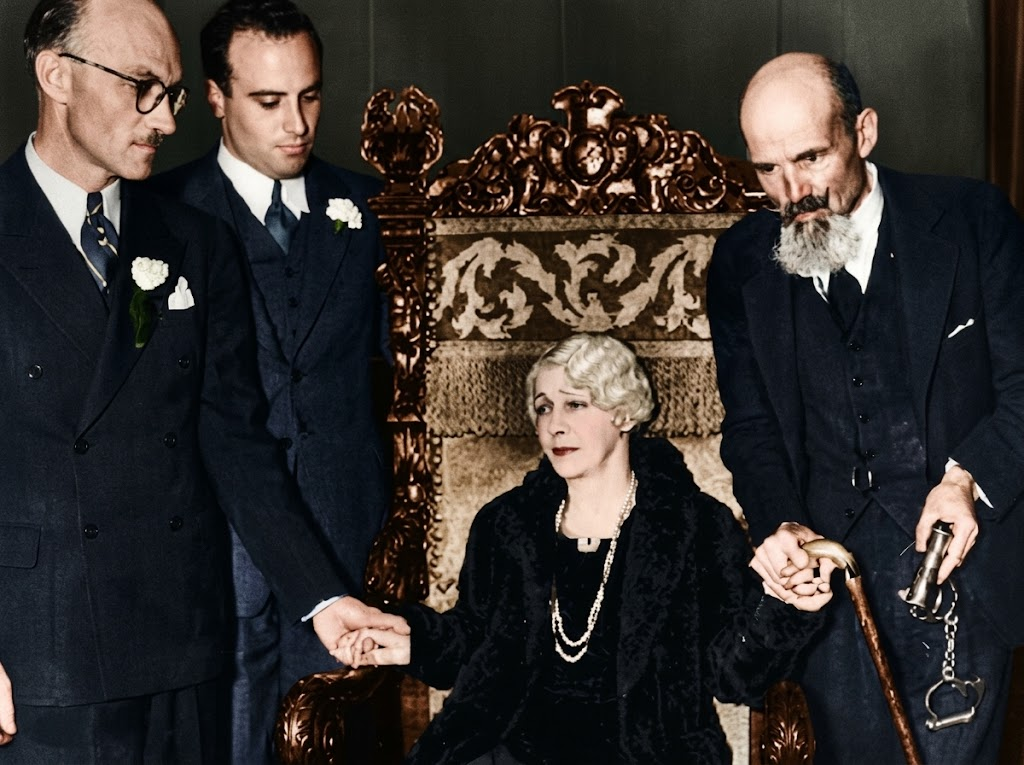
The next day, January 9, Bess signed a statement, on what appears to be Houdini letterhead, declaring that the sequence Ford gave was the correct message prearranged between her and Harry.
Ford closed the session with what he presented as Houdini’s own words:
“Tell the whole world that Harry Houdini still lives and he will prove it a thousand times and more. In my life, I was perfectly honest and sincere in trying to disprove the survival of consciousness, and I resorted to tricks to prove my point for the simple reason that I did not believe communication was possible. I am now sincere in my desire to undo this mistake. Tell all those who lost faith because of my mistake to lay hold again of hope, and to live with the knowledge that life is continuous. That is my message to the world, through my wife and through this psychic medium.”
The dispute
The challenge came within 48 hours. On January 10, the New York Evening Graphic branded the séance a hoax and reported that Ford had admitted getting the code from Bess, a claim Ford denied.
The stronger objection is documentary. In June 1928, seven months before the séance, Harold Kellock’s authorized biography, Houdini: His Life Story, written from Bess’s own recollections and papers, set out the couple’s stage code on page 105: its letters, key numbers, and key words. And “Rosabelle” was hardly secret; it was Bess’s stage song and the inscription on her ring. (Skeptic’s Dictionary; Genii Magazine)
The signed statement has its own problem. According to skeptical accounts drawing on magician-historian Milbourne Christopher, the document was not written in Bess’s own hand; she signed a text someone else had prepared. And Bess herself later disavowed the message more than once, attributing her endorsement to illness, before her death in 1943.
The case for it
The published cipher is not the published message. Kellock’s book gave anyone the means to spell a word in the Houdini code. It did not reveal which word Harry and Bess had chosen, that the message was a single word, or that “Rosabelle” was its key. By Bess’s account in January 1929, that combination was known only to the two of them, and Ford produced it exactly. A statement drafted by another hand is still a statement she chose to sign, and at the time she also affirmed publicly that only she and Harry knew the code. Her later retractions came years afterward, from a widow who had become a public symbol to both camps.
Neither side has closed the question in a century. The skeptic must explain how Ford knew the selection; the believer must explain why Bess walked her endorsement back.
Ten years is long enough
Bess held a public séance every October 31 for a decade, both as a genuine attempt to reach Harry and as a way to keep the Houdini name before the public. Celebrities and writers attended. Houdini never again whispered in her ear as promised, not at the séances and not in the hour a week she sat alone with his photograph.
Her last séance was held in 1936, on the tenth anniversary of his death, on the roof of the Knickerbocker Hotel in Hollywood and broadcast nationally by radio. When nothing came, she gave up hope, wished Harry good night, and told the press that ten years was long enough to wait for any man.
The ritual did not end with her. Magicians and believers have held a Houdini séance somewhere every Halloween since. This Saturday, a century to the day after he died, they will try again.
The Twilight Zone: Samhain Comes to Television
If Samhain is the night the veil thins, The Twilight Zone is the place you stand when it does. Rod Serling built a weekly series around the threshold that Allhallowtide keeps once a year.
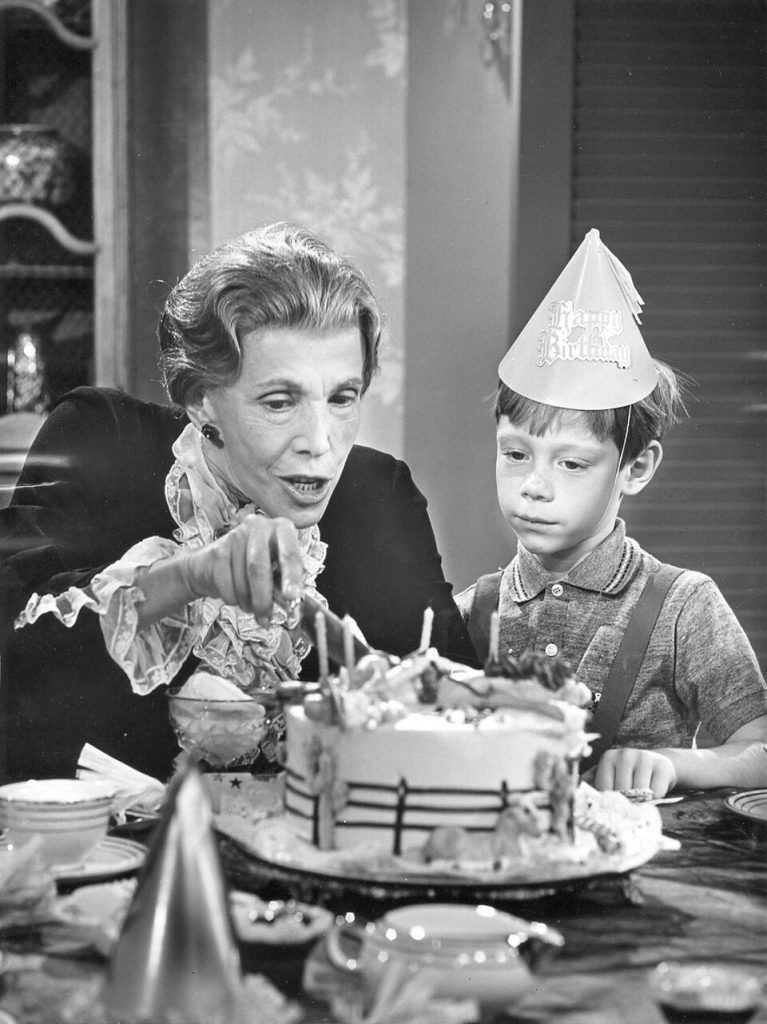
The show premiered on CBS on October 2, 1959, and ran five seasons and 156 episodes until June 19, 1964. Serling created it, hosted it, and wrote most of it. (Wikipedia)
His first-season opening defined the zone as a fifth dimension, “the middle ground between light and shadow,” lying between science and superstition, between humanity’s deepest fears and its highest knowledge. That is a precise description of a liminal time. The Celts located it on the calendar; Serling located it in the living room, every Friday night.
The series returned again and again to Allhallowtide’s core themes: the dead reaching the living, the mask that reveals, and death arriving at the door.
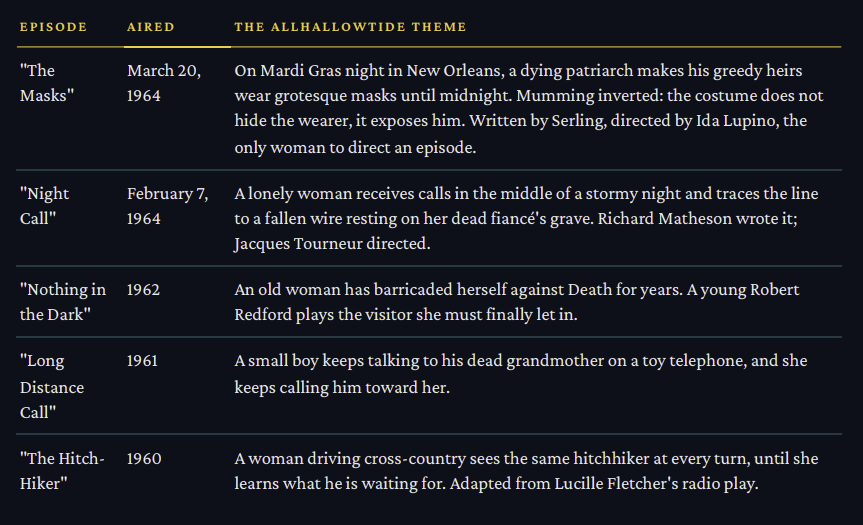
“Night Call” carries its own piece of history. It was scheduled to premiere on Friday, November 22, 1963, the day President Kennedy was assassinated, and was pulled; it finally aired that February. (Wikipedia; Senses of Cinema)
Read beside the Houdini séance, “Night Call” and “Long Distance Call” are the same story told in different media: a message from the dead arriving over an ordinary channel, a coded line in 1929 and a telephone line in 1964. Serling’s audience understood the premise immediately, because Allhallowtide had been telling it for centuries.
The Sky Over Halloween 2026
Allhallowtide 2026 sits inside a window bounded by two stations. It opens with Mercury turning retrograde in Scorpio on October 24 and closes when Mercury and Venus both turn direct on November 13.
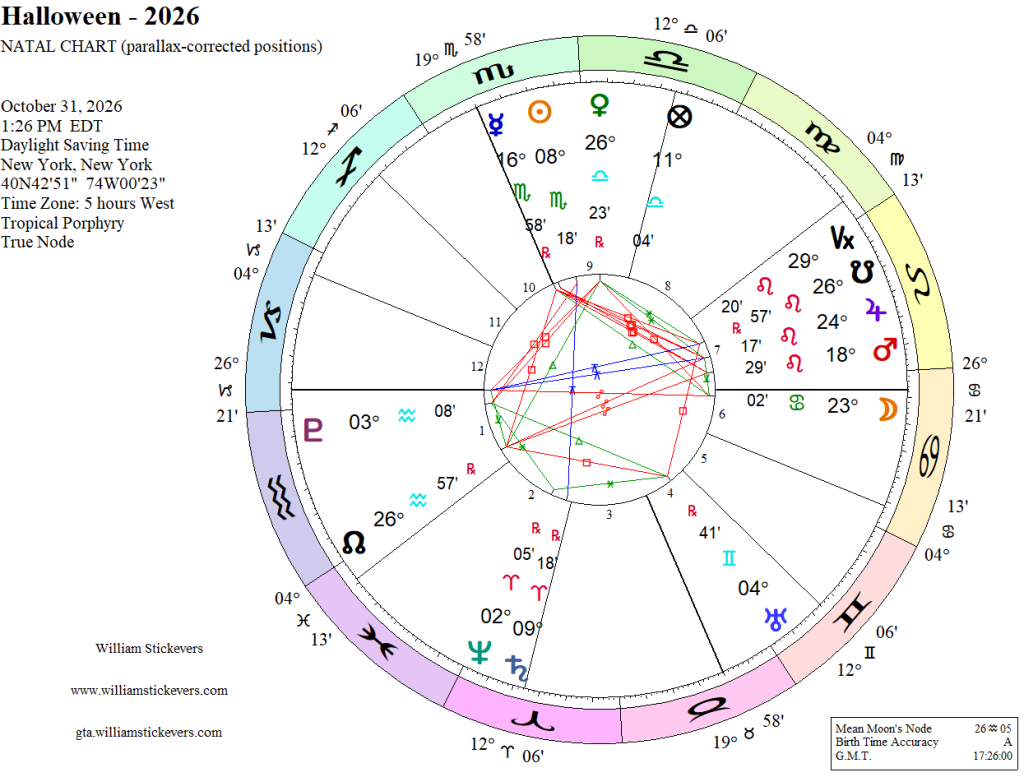
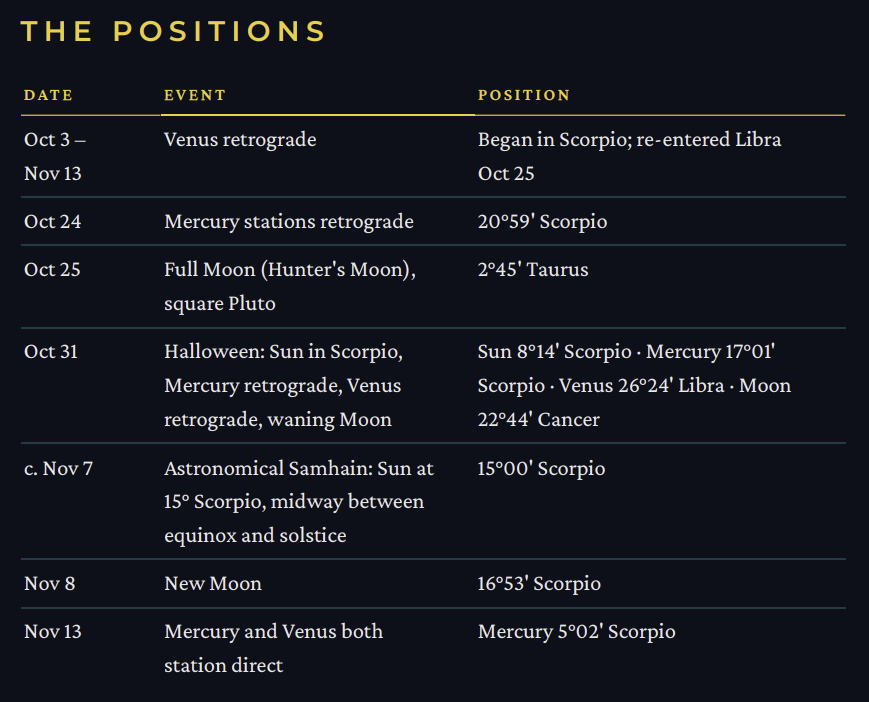
Dates and times are Pacific; the Full Moon falls just after midnight October 26 in Eastern time, and the New Moon on November 9 in UTC. Mars and Jupiter are in Leo throughout. Sources: Astrology.com, Astrolis, Synthesis Astrology.
The reading
The retrieval signature. Mercury retrograde is the cycle of return: messages resurface, old channels reopen, settled matters come back for review. In Scorpio, the sign of death, inheritance, and what is hidden, that return points toward the dead and what they left unfinished. On Halloween, Mercury is retracing degrees it crossed in mid-October, and the Moon is in Cancer, the sign of ancestry and memory. The symbolism matches the occasion: a festival of the dead, on the centennial of the most famous attempted message from one.
Calendar Samhain and sky Samhain. October 31 is the date tradition fixed. The astronomical cross-quarter, the Sun at 15° Scorpio, falls around November 7. The Scorpio New Moon follows on November 8 at 16°53′, inside the arc Mercury is retracing. For anyone who keeps Samhain by the sky rather than the calendar, the night of November 8 is the one to mark.
Forecast. Between October 24 and November 13, matters thought closed will reopen in Scorpio’s domains: criminal investigations, estates and inheritances, sealed records, and claims about the dead. The test: at least one prominent closed case, sealed record, or contested estate returns to national headlines inside the window. If the window passes with nothing beyond the ordinary news flow in these areas, the forecast fails.
The double station. Mercury and Venus turn direct on the same day, November 13. That closes the window. What came back during Allhallowtide gets sorted, and the season of looking back gives way to moving forward.
The larger frame. Pluto in Aquarius is the long-cycle signature of artificial intelligence and collective technology. Uranus in Gemini governs networks, messages, and speech. The griefbot market is where the two meet Halloween’s oldest theme: the dead given a voice through a machine, built from their own words. Saturn and Neptune together in Aries pose the question that follows, because Saturn draws boundaries and Neptune dissolves them: where does comfort end and illusion begin? Houdini spent his career policing exactly that line between the trick and the genuine contact. A century after his death, the line is being redrawn in software.
What Halloween Has Been About
Every era has rebuilt Halloween around its own central problem.
- Early and High Middle Ages (800–1400): For the church, All Hallows was about the redemption of the soul.
- Late Middle Ages (1400–1550): Souling made it a night of exchange between classes: food from prosperous houses to the poor at the door, paid for in prayers for the household’s dead.
- Early 20th-century America: It became a secular, community-wide celebration that helped assimilate waves of European immigrants into American town life.
- 1950s: It belonged to the postwar Baby Boom children, with horror movies, pumpkin carving, and trick-or-treating.
- 2001: Six weeks after 9/11, New York’s Village Halloween Parade was led by a giant illuminated phoenix puppet, a symbol of death followed by rebirth.
- 2026: A century after Houdini’s death, the dead can be simulated on demand, and Halloween asks the question it has always asked: what crosses over, and what comes back.
The veil thins this week. Light the candles, set a place at the table, and listen.
Allhallowtide, 2026
Set out the cake with the cross pressed in,
the candle low on the sill;
the year has turned to its darker half,
and the road to the door lies still.
They came of old in the Gaelic dark
to the fire and the empty chair,
and the poor went souling from door to door
and paid for their bread in prayer.
A century gone, a magician lay
on the last night of the year,
and swore if a lock could open from death
he would find his way back here.
Nine words and a song on a wedding ring,
and the one word the nine would weave:
the medium spoke, and the widow signed,
and the world was asked to believe.
A wire came down in a storm one night
on a grave in the churchyard loam,
and an old woman lifted the ringing phone
to a voice that was calling home.
Now the dead are spun from the words they left,
from the voicemail and the text;
we have built a séance out of light,
and we wonder what comes next.
The messenger walks the road backward now
through the sign where the dying go;
what was buried comes back for a second look,
and the year leans into the snow.
So leave the latch undone tonight,
set a chair where the embers glow,
and say the names of the ones you’ve lost,
and listen. The veil is low.

